.jpg)














Why Your Tech Degree Is Broken And How an MIS Master’s Program Fixes It







Summary
MIS master’s programs bridge the gap between technical data management and corporate business strategy. A master’s in management information systems prepares graduates for lucrative roles like business analysts, systems architects, and IT managers. This MIS course pathway yields excellent ROI, driving an estimated 15% job growth through 2032 with average global salaries reaching over ₹75 Lakhs to ₹1.43 Crore per annum (₹75 LPA – ₹143 LPA).
You’ve likely spent hours scrolling through job boards, only to find yourself trapped in a frustrating paradox. Tech jobs demand that you know complex coding inside out. Management roles want you to have years of corporate leadership strategy. If you choose pure coding, you risk hitting a mid-career ceiling or facing automation. If you choose standard management, you feel completely disconnected from the tech driving today’s digital economy.
It feels like you’re being forced to pick a side: become a code-heavy developer locked in a back room, or a business manager who doesn’t understand how a basic database functions.
But what if you didn’t have to choose?
There is a highly profitable middle path that smart students and corporate professionals are quietly taking to fast-track their way into high-paying leadership roles. It’s called a master’s in management information systems, and it is quickly becoming the ultimate career pivot tool for 2026.
Table of Contents
What is an MIS Course and Why is Everyone Talking About It?
At its core, a Management Information System (MIS) is the study of how people, technology, and organizations interact.
Think of it this way:
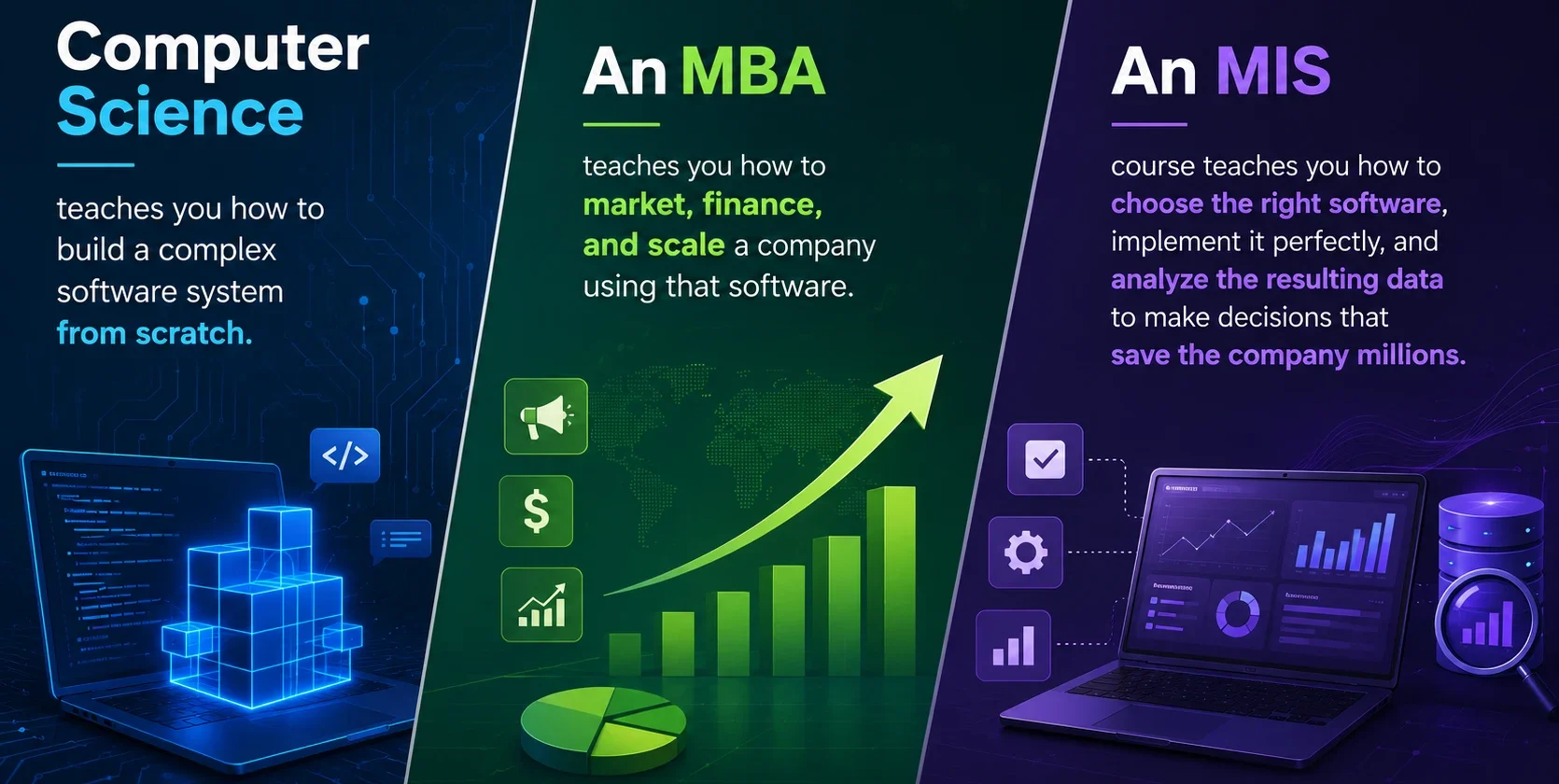
- Computer Science teaches you how to build a complex software system from scratch.
- An MBA teaches you how to market, finance, and scale a company using that software.
- An MIS course teaches you how to choose the right software, implement it perfectly, and analyze the resulting data to make decisions that save the company millions.
In short, you don’t build the engine—you are the master mechanic who designs how the entire factory operates.
What Do You Actually Learn in MIS Master’s Programs?
The biggest fear most students have when looking at tech-heavy graduate degrees is: “Am I going to spend two years drowning in raw code?”
The short answer is no. While you will learn foundational technical concepts, MIS master’s programs focus heavily on analytical application and system architecture.
The core curriculum of a top-tier program generally breaks down into five foundational areas:
- Data Governance & Architecture: Designing efficient database structures and learning how to query data quickly using SQL.
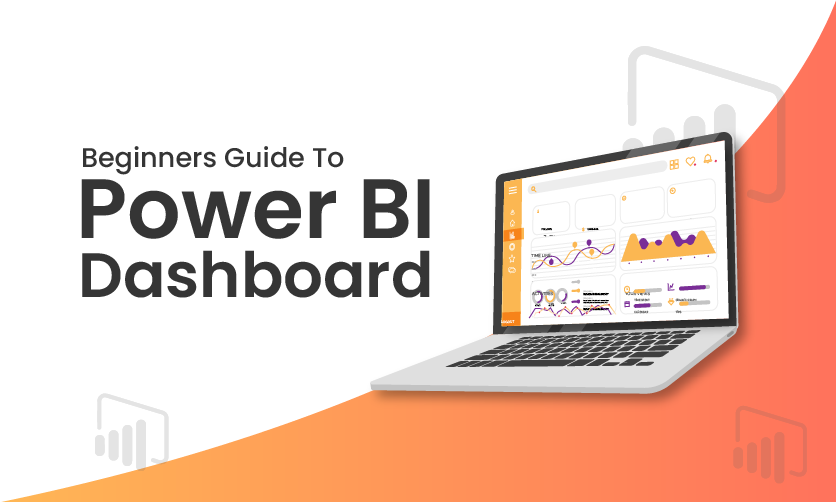
- Business Intelligence & Analytics: Turning raw user data into clean, interactive dashboards using tools like Power BI and Tableau.
- IT Project Management: Leading cross-functional teams, managing budgets, and keeping large tech rollouts on schedule.
- Cybersecurity Risk Management: Ensuring that an organization’s internal data structures are completely safe from modern digital threats.
- Enterprise Resource Planning (ERP): Integrating company workflows—like supply chain, HR, and finance—into a single, unified system (like SAP).
Master MIS skills and boost your career potentialUnlock high-demand MIS job opportunities—Join our industry ready course today! |
|
| Classroom Course | Online Course |
| More Learning Options for you: Certificate in Data Science | Advanced Excel Course |
|
Is an MIS Degree Actually Worth the Investment in 2026?
Let’s look at the hard data. According to recent reports from the U.S. Bureau of Labor Statistics and global job market analytics, employment for computer and information systems managers is projected to grow by 15% over the next decade, which is significantly faster than the average for all other occupations combined.
| Job Title | Average Mid-Career Salary (INR) | Core Responsibility |
|---|---|---|
| Business Systems Analyst | ₹75 Lakhs – ₹1 Crore / year | Translating client business needs into tech solutions. |
| Cybersecurity Risk Lead | ₹83.5 Lakhs – ₹1.08 Crore / year | Protecting internal enterprise networks and data assets. |
| IT Project Manager | ₹91.8 Lakhs – ₹1.25 Crore / year | Leading tech implementations from planning to launch. |
| Information Systems Manager | ₹1.43 Crore+ / year | Overseeing corporate IT infrastructure and strategy. |
Because you understand both the technical vocabulary of the developers and the financial metrics of the executives, you become completely indispensable. You are the structural bridge that keeps corporate projects from falling apart.
How ICA Edu Skills Prepares You for the Tech-Business Revolution
While high-level international MIS master’s programs sound incredible, they often require a massive upfront financial investment, years of preparation for competitive exams like the GRE or GMAT, and extensive technical prerequisites.
What if you want to gain these exact in-demand skills and start earning a premium salary right now without taking on massive debt? This is exactly where ICA Edu Skills steps in.
We designed our advanced certifications to strip away the academic fluff and give you the precise, practical skills that top corporate employers are actively looking for today.
Why Students Choose ICA Edu Skills for MIS Training
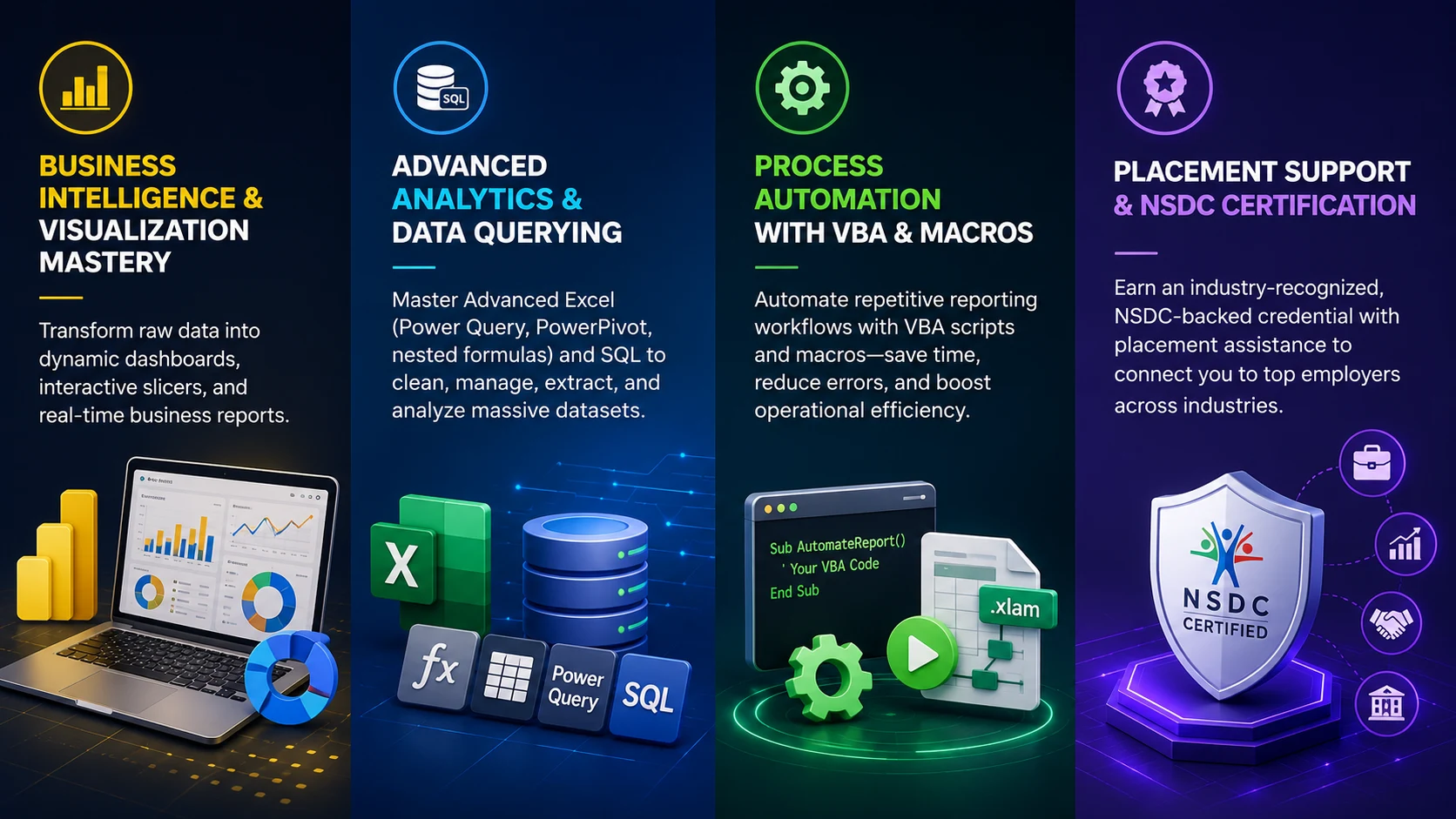
- Business Intelligence & Visualization Mastery: Master Power BI and Google Studio to transform raw organizational data into dynamic, executive-ready dashboards, interactive slicers, and real-time business reports.
- Advanced Analytics & Data Querying: Move beyond basic spreadsheets by mastering Advanced Excel (Power Query, PowerPivot, nested formulas) and SQL to clean, manage, extract, and analyze massive datasets from relational databases.
- Process Automation with VBA & Macros: Learn to write VBA scripts and record macros to automate repetitive reporting workflows—dramatically reducing turnaround times and making you an indispensable asset to operations and finance teams.
- Placement Support & NSDC Certification: Gain an industry-recognized, NSDC-backed credential paired with direct placement assistance connecting you to top MNCs, analytics firms, BFSI corporations, and corporate employers.
Whether you are a commerce graduate wanting to pivot into IT management, or a fresher looking to build a highly secure, data-driven corporate career, the ICA Edu Skills MIS course provides the practical training you need to get hired by top employers.
Your Next Career Move
The corporate landscape has fundamentally changed. Companies no longer want isolated specialists who understand only code or only spreadsheets. They are actively hunting for hybrid professionals who can seamlessly walk between both worlds.
Enrolling in an MIS course framework or mastering advanced data systems is a definitive way to recession-proof your career and unlock senior leadership roles early. Stop watching from the sidelines while data-driven professionals claim the highest salaries—take control of your professional path today.
Few related topics for your knowledge
- 40+ Important Interview Trial Balance Questions & Answers
- Top 30 MIS Analyst Interview Questions & Answers
- Don’t Miss These 40 G Suite Interview Questions to Land Your Dream Job
- 80 Most Common Power BI Interview Questions and Answers
- Career in Management Information System: Insights, Scope, Opportunities
Frequently Asked Questions
1. What is the full form of MIS?
The full form of MIS is Management Information System. It refers to an integrated, computer-based data system designed to collect, process, store, and organize business data. Managers and corporate executives then use this structured information to make smart, data-driven decisions that improve everyday business operations.
2. Can a commerce student pursue an MIS course?
Absolutely. A commerce student is actually an ideal candidate for an MIS course. Because you already understand fundamental business concepts, finance, and accounting workflows, you only need to learn how to layer data analytics, ERP systems (like SAP), and database management tools on top of your existing knowledge.
3. What is the average salary after completing an MIS program?
In India, freshers entering entry-level MIS executive or analyst roles typically earn between ₹3 LPA and ₹4.5 LPA. However, as you gain 2 to 5 years of experience and master advanced skills like SQL, SAP, or Power BI, salaries scale quickly to ₹8 LPA – ₹12 LPA+, with international tech managers earning well over ₹83.5 Lakhs (₹83.5 LPA).
4. Is coding mandatory for success in MIS master’s programs?
No, deep programming or software development is not mandatory for success in MIS. While you will learn foundational technical concepts to understand how databases and web architectures interact, your daily role focuses on data analysis, system integration, project leadership, and strategic business problem-solving.
5. Which is better: an MBA or a Master’s in MIS?
It entirely depends on your long-term professional goals. An MBA offers a very broad education focused on general business management, marketing, and human resources. An MIS master’s degree specifically targets professionals who want to work directly at the fast-growing intersection of technology strategy and big data.

- The GST Return Filing Course That Could Save Your Career - September 5, 2026
- Source List in SAP MM: Why Every Interviewer Asks This - August 28, 2026
- Best English Speaking Course: Why Fluency Beats Your Degree - August 21, 2026