.jpg)















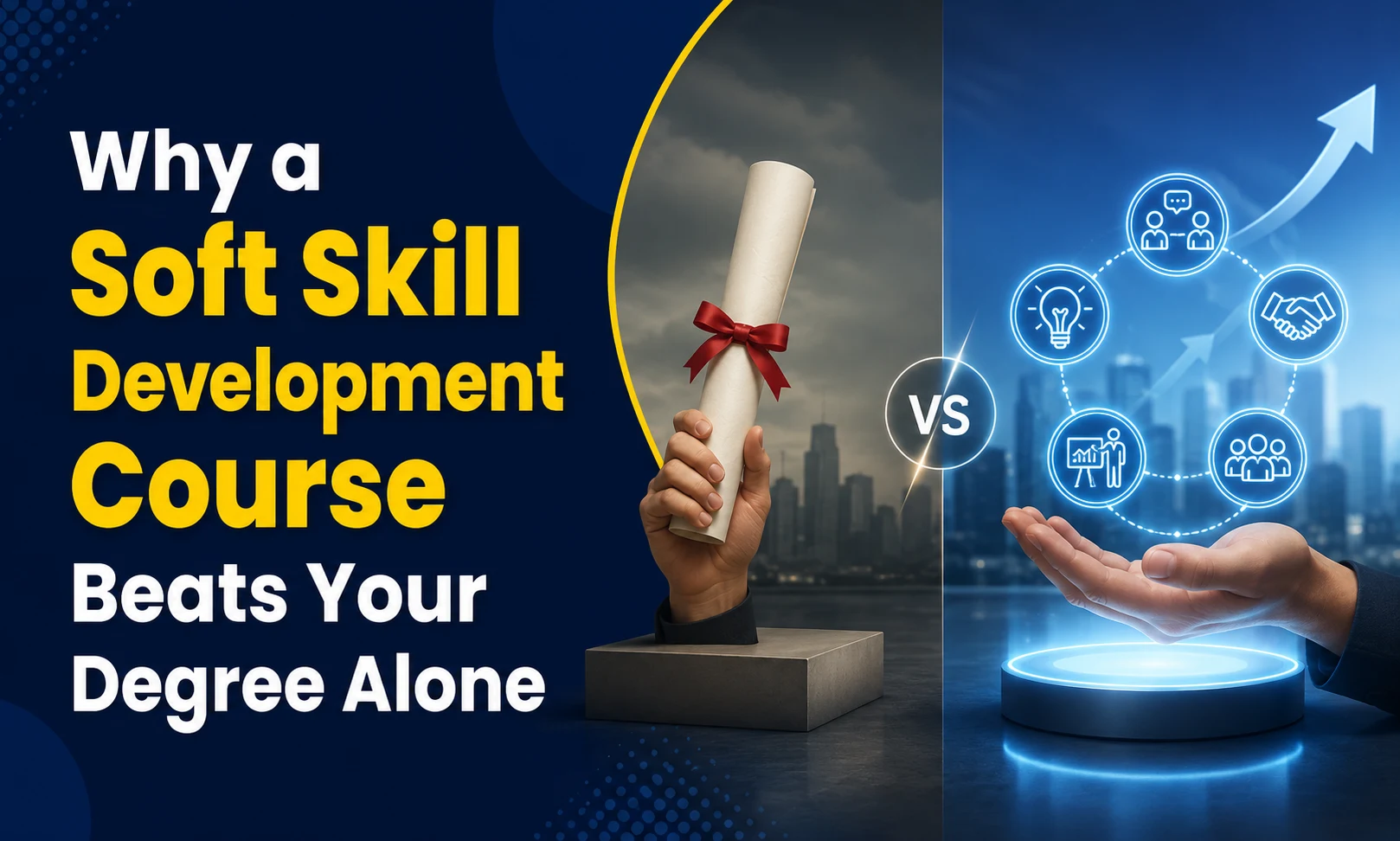
Why a Soft Skill Development Course Beats Your Degree Alone







Summary
A soft-skill development course is a structured training program that builds communication, teamwork, problem-solving, and workplace readiness skills that degrees rarely teach. With India’s graduate employability at just 56.35% according to the India Skills Report 2026, pairing technical knowledge with a soft skill development program is often what separates an offer letter from a rejection email.
You aced your exams. Your resume lists Tally, Advanced Excel, maybe even a GST certification. You’ve applied to 60 jobs this month.
And yet silence. Or worse: “We’ve decided to move forward with other candidates.” Sound familiar?
Here’s the part nobody tells you at college: it’s probably not your marks holding you back. A well-known Leadership IQ study that tracked over 20,000 new hires found that 89% of hiring failures came down to attitude and interpersonal skills, not a lack of technical knowledge. Only 11% failed because of an actual skill gap.
Read that again. Nine out of ten people who don’t make it past their first year on the job weren’t rejected for what they knew. They were rejected for how they communicated, handled pressure, or worked with a team.
That’s the real story behind India’s employability numbers too. According to the India Skills Report 2026, the country’s overall graduate employability rate stands at 56.35%, meaning nearly half of all graduates still struggle to convert their degree into a job. Not because the jobs aren’t there. Because the gap isn’t in the syllabus. It’s in the skills a syllabus never tests.
This is exactly where a soft skill development course comes in.
Table of Contents
- What Is a Soft Skill Development Course?
- Why Do Toppers Still Struggle to Get Hired?
- Hard Skills vs. Soft Skills: What’s the Real Difference?
- What Are the Most In-Demand Soft Skills in 2026?
- How Does a Skill Development Program Help Career Switchers?
- Real Scenario: Same Marks, Different Outcomes
- How ICA Edu Skills Builds Soft Skill Development Into Every Course
- The Bottom Line
- Frequently Asked Questions
What Is a Soft Skill Development Course?
A soft skill development course is a structured training program built around the behavioral and interpersonal abilities that determine how well you actually perform at work as opposed to what you technically know.
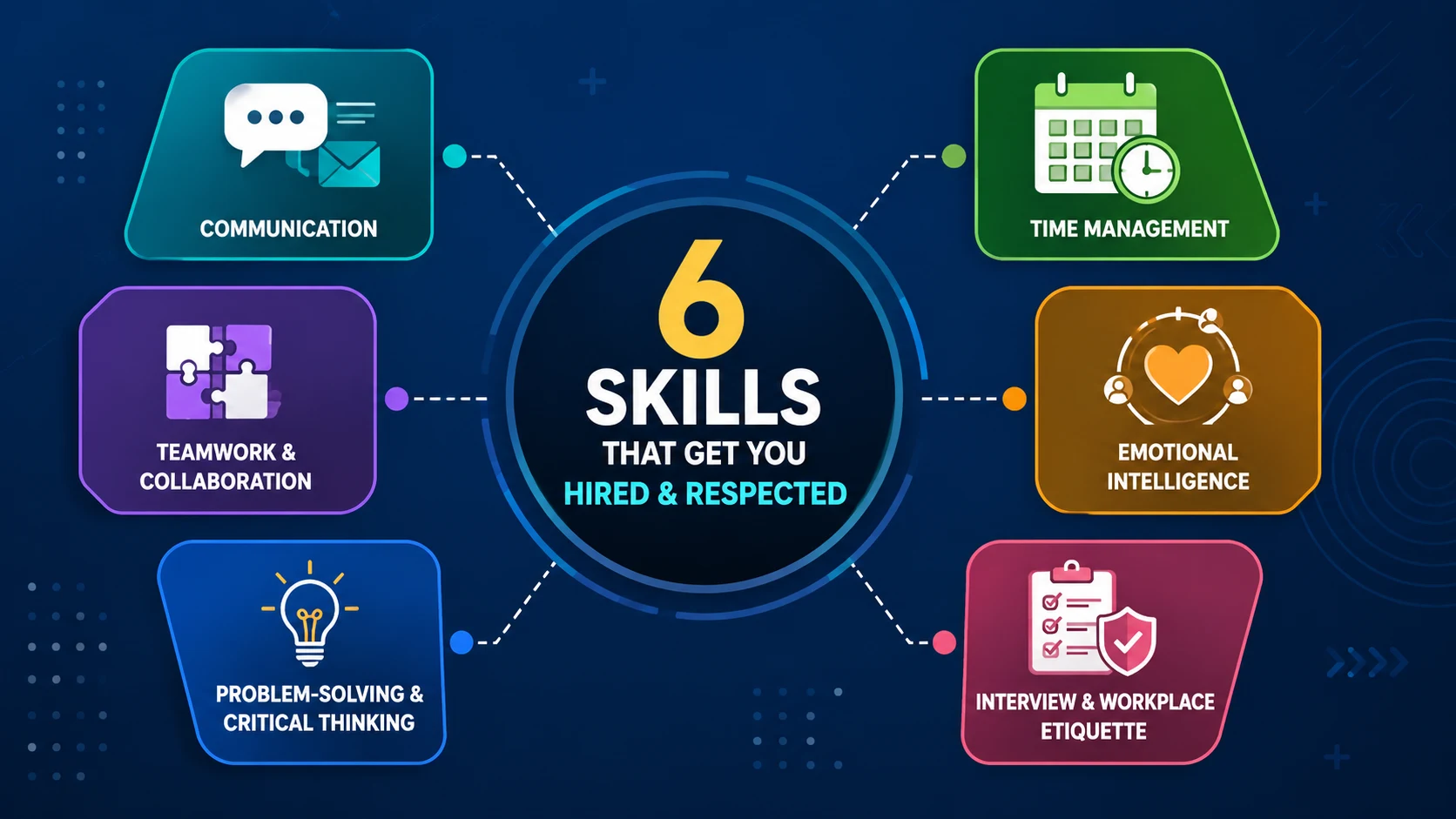
A skill development program in this category covers:
- Communication: speaking clearly, writing professional emails, presenting ideas without rambling
- Teamwork and collaboration: working across departments, handling disagreements without drama
- Problem-solving and critical thinking: reacting to a real, messy situation, not a textbook case study
- Time management: meeting deadlines when three things are due the same day
- Emotional intelligence: reading the room, giving and receiving feedback without taking it personally
- Interview and workplace etiquette: how to actually get through the door before any of the above even matters
None of this shows up on a mark sheet. All of it shows up in an interview room, a team meeting, or your first month on the job.
Why Do Toppers Still Struggle to Get Hired?
Meet a scenario that plays out in almost every campus placement season: a B.Com graduate with 82% marks, a solid grip on accounting fundamentals, and zero calls back after three rounds of interviews.
On paper, she’s a strong candidate. In the interview room, she freezes when asked to explain a balance sheet discrepancy in plain language to a non-finance panel member. She has the knowledge. She doesn’t have the delivery.
This isn’t a rare case; it’s the pattern the data keeps confirming. Deloitte’s Human Capital Trends 2025 report found that demand is accelerating for candidates who combine technical fluency with genuine interpersonal ability, not one or the other. Employers aren’t choosing between a “skilled” candidate and a “likeable” one. They’re rejecting anyone who’s only one of the two.
Hard Skills vs. Soft Skills: What’s the Real Difference?
| Parameters | Hard Skills | Soft Skills |
|---|---|---|
| What it is | Technical, teachable, measurable | Behavioral, situational, harder to test |
| Example (accounting) | Passing GST entries in Tally | Explaining a GST notice to a worried client without jargon |
| Example (office work) | Building a pivot table in Excel | Presenting that pivot table’s findings to a manager in two minutes flat |
| How it’s evaluated | Tests, certifications, portfolios | Interviews, group discussions, day-to-day conduct |
| Can AI replace it? | Increasingly, yes, for routine tasks | Not easily; judgment, trust-building, and leadership stay human |
Both matter. But here’s the catch: most students spend 90% of their prep time on the left column and almost none on the right, even though the right column is what decides whether the interview converts into an offer.
What Are the Most In-Demand Soft Skills in 2026?
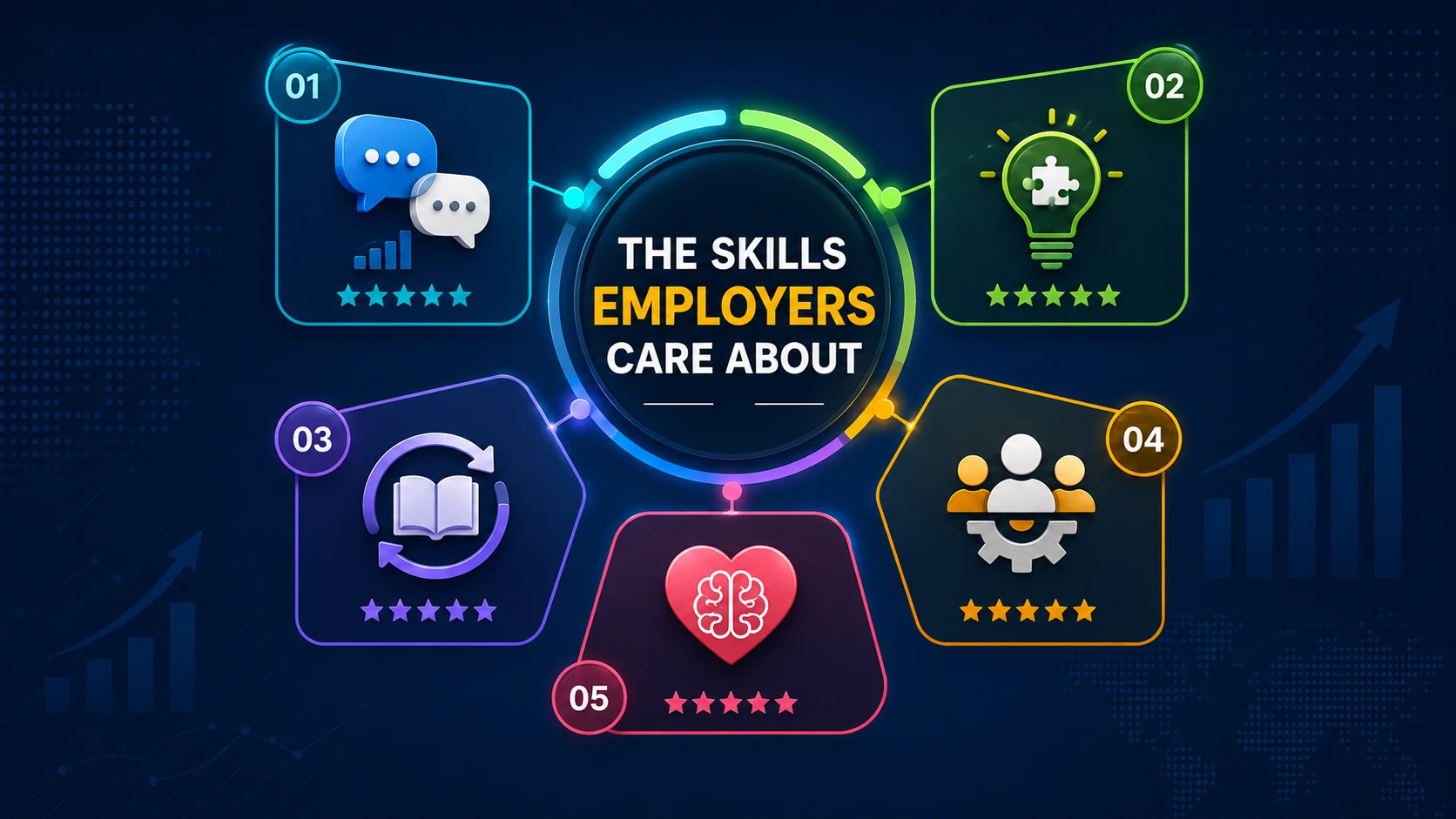
Global and Indian data are pointing at the same shortlist:
- Communication: a 2025 LinkedIn Workplace Learning Report found it remains the #1 skill employers evaluate during both hiring and internal promotions
- Analytical and critical thinking ranked the single most important skill globally by the WEF Future of Jobs Report 2025
- Adaptability and learning agility: the same WEF report projects that nearly 44% of core job skills will shift by 2026
- Teamwork and collaboration consistently named across sector reports as a top screening factor for freshers
- Emotional intelligence increasingly used to separate equally-qualified candidates in final interview rounds
Notice what’s missing from this list: a specific software, a specific certification, a specific degree. That’s the point. These skills travel across every job title accounting, marketing, operations, IT support because they’re about how you work, not what you work on.
How Does a Skill Development Program Help Career Switchers?
If you’re switching careers, say, from teaching to accounts, or from mechanical engineering to business operations, your fears probably sound like this:
- “Will recruiters take me seriously without a related degree?”
- “Am I too old to start over in a new field?”
- “How do I explain a career gap or an unrelated background in an interview?”
A well-structured skill development training doesn’t just teach you the technical basics of your new field; it directly trains you to answer these exact questions with confidence. Mock interviews, group discussions, and structured feedback sessions exist precisely to turn “I don’t have direct experience” into a coherent, confident story about transferable skills.
Consider a mechanical engineer moving into finance operations. He doesn’t need to relearn how to learn; he already knows how. What he needs is practice translating his analytical background into the language recruiters in finance actually listen for, and the composure to hold his own in a room full of commerce graduates. That’s a soft-skills problem, not a technical one, and it’s entirely trainable.
Real Scenario: Same Marks, Different Outcomes
Picture two candidates applying for the same accounts executive role, both with near-identical academic scores and the same Tally and GST training.
| Parameters | Candidate A (technical training only) | Candidate B (technical + soft skill training) |
|---|---|---|
| Interview opening | Reads answers almost verbatim from notes | Makes eye contact, opens with a brief, relevant example |
| Technical question on GST | Gives the correct answer, but mechanically | Gives the correct answer, then explains its business impact in one line |
| Curveball question (“Tell me about a conflict at work/college”) | Goes blank or gives a vague, rehearsed answer | Structures a real example clearly, shows self-awareness |
| Panel’s takeaway | “Knows the subject, unsure about the fit” | “Knows the subject and can represent us to a client” |
Same knowledge. Same certificate. Very different outcome because the interview room tests more than recall.
How ICA Edu Skills Builds Soft Skill Development Into Every Course
This is exactly the gap ICA Edu Skills closes, not through a separate, standalone soft skill development course, but by building dedicated soft skill training directly into every course, whether you’re learning Tally, GST, Advanced Excel, or SAP FICO/MM.
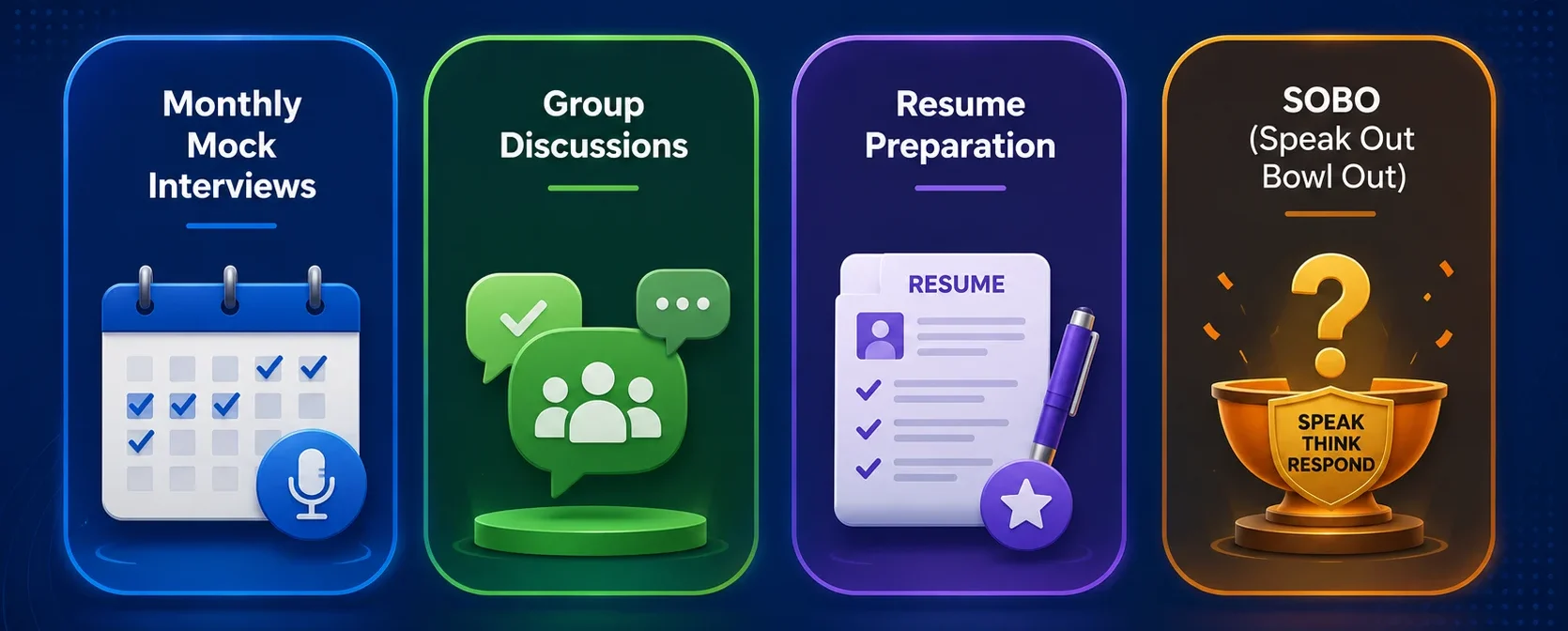
What that actually looks like:
- Monthly mock interviews: recurring practice under real interview pressure, not a one-time session right before you graduate
- Group discussions: structured practice in holding a viewpoint, listening, and disagreeing without derailing the room
- Resume preparation: dedicated support to frame your background and skills clearly on paper before you ever walk into an interview
- SOBO (Speak Out Bowl Out): a knockout-style speaking activity built to push you to think and respond on the spot, not recite a rehearsed answer
The idea isn’t to bolt soft skills on as an afterthought; it’s to make sure they get practiced repeatedly, alongside the technical learning, so both are ready by the time you’re in front of an interview panel.
The Bottom Line
Your marksheet gets you shortlisted. Your soft skills get you hired and, more importantly, keep you hired past the first few months when most new employees quietly fail. If you’ve been stacking certifications and still hearing silence after interviews, the missing piece probably isn’t another technical course. It’s the one skill set nobody graded you on.
If that sounds like where you’re stuck right now, it might be worth exploring how a course that combines both technical depth and the communication, teamwork, and interview skills employers actually screen for could change your next interview outcome.
Few related topics for your knowledge
- Job Guarantee Vs Job Assistance: Core Points Of Differences Between The Two
- 10 Life Changing Simulation Softwares To Learn In Upcoming Years
- Top 20 Journal Entries Questions And Answers For Interview
- 15 Essential Inventory Valuation Questions & Answers For Interview
- 50 Important Cash Book Questions & Answers For Interview Preparation
Frequently Asked Questions
1. What is a soft skill development course?
A soft skill development course is a structured training program that builds communication, teamwork, problem-solving, emotional intelligence, and workplace-readiness abilities that most academic degrees do not cover in depth.
2. What is the difference between hard skills and soft skills?
Hard skills are technical and measurable, like Tally entries or GST filing. Soft skills are behavioral, like explaining a report clearly, staying calm under deadline pressure, or working well in a team. Both are needed for job success.
3. How long does a skill development course take to show results?
Most learners notice sharper communication and interview confidence within 4-8 weeks of consistent practice, though real workplace fluency builds over 3-6 months as skills get used in real tasks, mock interviews, and group projects.
4. Can I learn soft skills online, or do I need classroom training?
Both work, but blended formats tend to help most. Live sessions and classroom role-plays build real-time confidence in communication and teamwork, while recorded modules let you revisit tricky topics like email etiquette at your own pace.
5. Are soft skills more important than technical skills for freshers?
Not more important, but often the deciding factor. A Leadership IQ study of 20,000+ new hires found 89% of hiring failures came from soft skill or attitude gaps, not a lack of technical knowledge, so both skill sets matter together.
- Nobody’s Talking About These Basic Computer Skills For Beginners - September 11, 2026
- The GST Return Filing Course That Could Save Your Career - September 5, 2026
- Source List in SAP MM: Why Every Interviewer Asks This - August 28, 2026