.jpg)

















Will Learning Advanced Excel Actually Help Me Get a Job?







Summary
Yes, Advanced Excel is worth your time, but only if you learn the right skills and can prove you can use them. This blog covers why employers still ask for Excel, which skills get you shortlisted, which roles it opens up, and how to learn it without wasting months.
Every job post says the same thing: “Proficiency in MS Excel required.” After a while, it starts to look like filler text.
It isn’t. But basic Excel isn’t what gets people hired anymore. Advanced Excel is.
Why Employers Still Ask for Excel
Accounts, MIS, finance, HR, sales operations, and analytics teams all run on spreadsheets. Even when a company uses fancy software, the data usually ends up in Excel for the final report.
Basic vs Advanced: The Difference
Imagine two freshers. Both get a sales sheet with 10,000 messy rows and need a region-wise summary by evening.
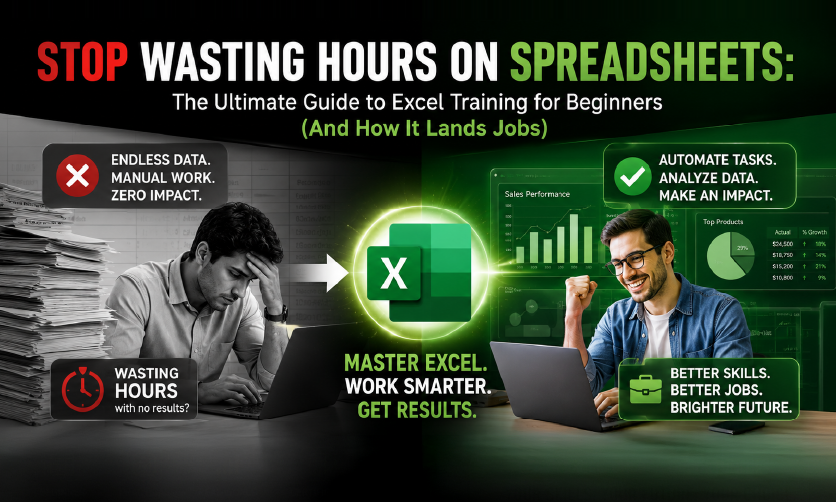
- Fresher A filters, copies, and pastes manually. It takes hours, and mistakes creep in.
- Fresher B uses a Pivot Table, XLOOKUP, and a quick dashboard. It takes 20 minutes.
Employers hire Fresher B because they pay for saved time and fewer errors.
Skills That Actually Get You Shortlisted
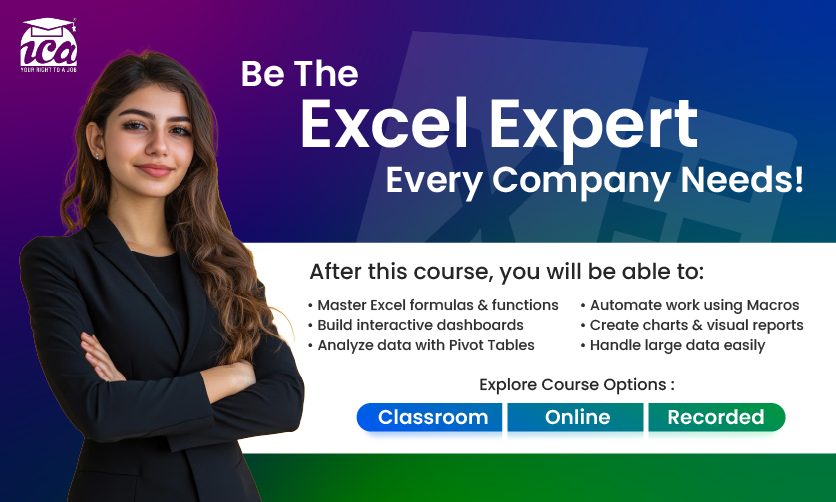
- Lookup functions: VLOOKUP, XLOOKUP, INDEX-MATCH
- Pivot Tables and Pivot Charts
- Conditional formulas: IF, SUMIFS, COUNTIFS
- Data cleaning with Power Query
- Dashboards and MIS reports
- Macros and basic automation
Jobs Where Advanced Excel Gives You an Edge
- MIS Executive
- Accounts Executive
- Data Analyst (Trainee)
- Business Analyst (Entry-level)
- Operations and Reporting Coordinator
It’s also a smart stepping stone to Power BI and SQL, which is where many career switchers aim next.
So, Is It Worth It?
It is worth it if you practise on real datasets, build two or three portfolio files, and can explain your work in an interview. It is not enough if you only watch videos and collect a certificate. Recruiters test with tasks, not trophies. Excel alone won’t guarantee a job. It will make you a noticeably stronger candidate than someone who stops at basic formulas.
Few related topics for your knowledge
- How To Create A Database Design In Excel: Step By Step Guide
- Custom Number Formatting In Excel: Learn Amazing Tricks To Employ
- Excel Lookup And Reference Functions: A Step By Step Guide
- How to Use Python in Excel – Tutorial and Tips
- Master The Visual Basic Editor In Excel
- Flash Fill In Excel: What Is it & Step By Step Tutorial
Where to Learn It
If you want structured guidance, the Advanced Excel Course by ICA Edu Skills is built around the Excel skills recruiters look for, like formulas, Pivot Tables, dashboards and MIS reporting. Every ICA course also includes monthly mock interviews, group discussions and resume preparation, so you learn how to present these skills as well.
Conclusion
Stop asking whether Excel is “still relevant.” Ask whether you can solve a real business problem with it. If the answer is no, that’s your starting point. Learn the skills above, build proof, and walk into interviews with confidence.
Frequently Asked Questions
1. Is Advanced Excel enough to get a job on its own?
For entry-level MIS, reporting, and accounts roles, it can be a strong deciding skill. For analyst roles, pair it with Power BI or SQL.
2. How long does it take to learn Advanced Excel?
With regular practice, most beginners become job-ready in a few weeks to a couple of months, depending on their starting level.
3. Can non-commerce students or career switchers learn Advanced Excel?
Yes. Excel is used across industries, and you don’t need an accounting background to start.

- Will Learning Advanced Excel Actually Help Me Get a Job? - October 9, 2026
- Skill Development Institute in India - September 26, 2026
- Master Data in SAP PP: The Skill Recruiters Test First - September 18, 2026