












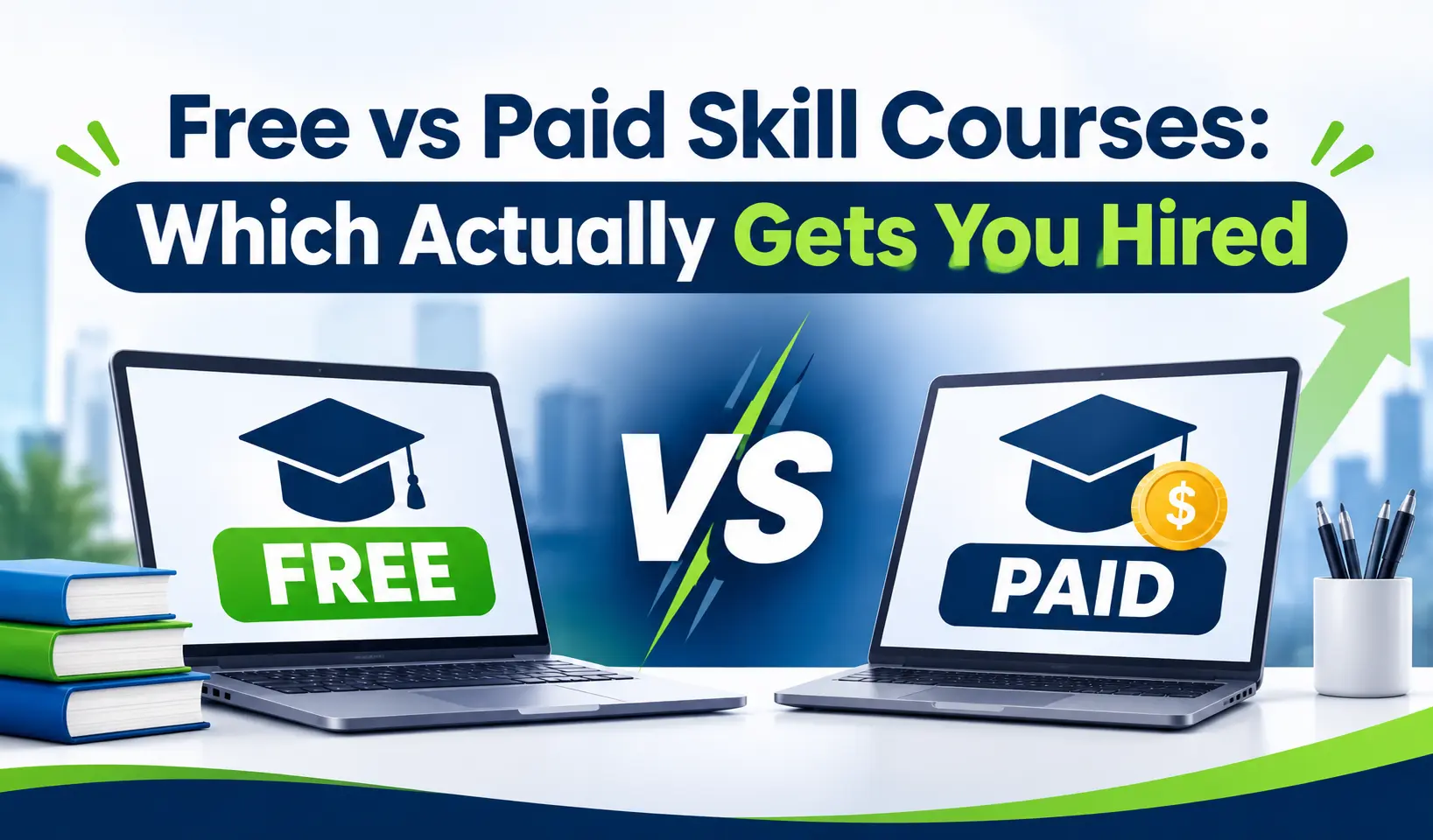
Free vs Paid Skill Courses: Which Actually Gets You Hired







Summary
Free skill courses are great for exploring a field, but they rarely get you hired on their own. Paid courses can, if they offer structure, practice, mentorship, and a recognised certificate. This blog compares both, shows when each makes sense on a tight budget, and gives you a simple checklist for choosing a course that leads to interviews.
You have 12 free courses saved, 3 half-finished, and zero interview calls. Frustrating, right?
You’re not lazy. You’re stuck in the gap between learning and getting hired. Let’s close it without emptying your wallet.
What Free Courses Do Well
Free courses are perfect for testing the waters. Not sure if you’d enjoy Excel, accounting, or data work? Spend a weekend on a free tutorial before spending a rupee.
They work best for:
- Exploring a skill before committing
- Learning one small topic, like VLOOKUP or a GST basics refresher
- Building the habit of self-study
Where Free Courses Fall Short
Here’s the catch. Hiring managers don’t ask, “How many videos did you watch?” They ask, “Can you do the work?”
Free courses often lack three things:
- Structure: you jump between random videos with no clear path
- Feedback: nobody checks whether your work is right
- Proof: a certificate anyone can download carries little weight
Think of cooking. Watching recipes is free, but a restaurant hires the person who has actually cooked under pressure.
You can explore the full list of courses
Where Paid Courses Win (If You Pick Right)
A good paid course gives you a roadmap, doubt-solving, real practice, and interview preparation. Compare two fresher profiles:
- Candidate A: 15 free certificates, no projects, nervous in mock interviews
- Candidate B: one structured course, practice on real software, ready to explain their work
Recruiters usually shortlist Candidate B. Not because they paid, but because they can show skill.
A high price doesn’t guarantee quality, though. Plenty of expensive courses are just recorded videos with a PDF attached.
How to Choose on a Budget
Ask these before paying:
- Does it include practice on real tools, not just slides?
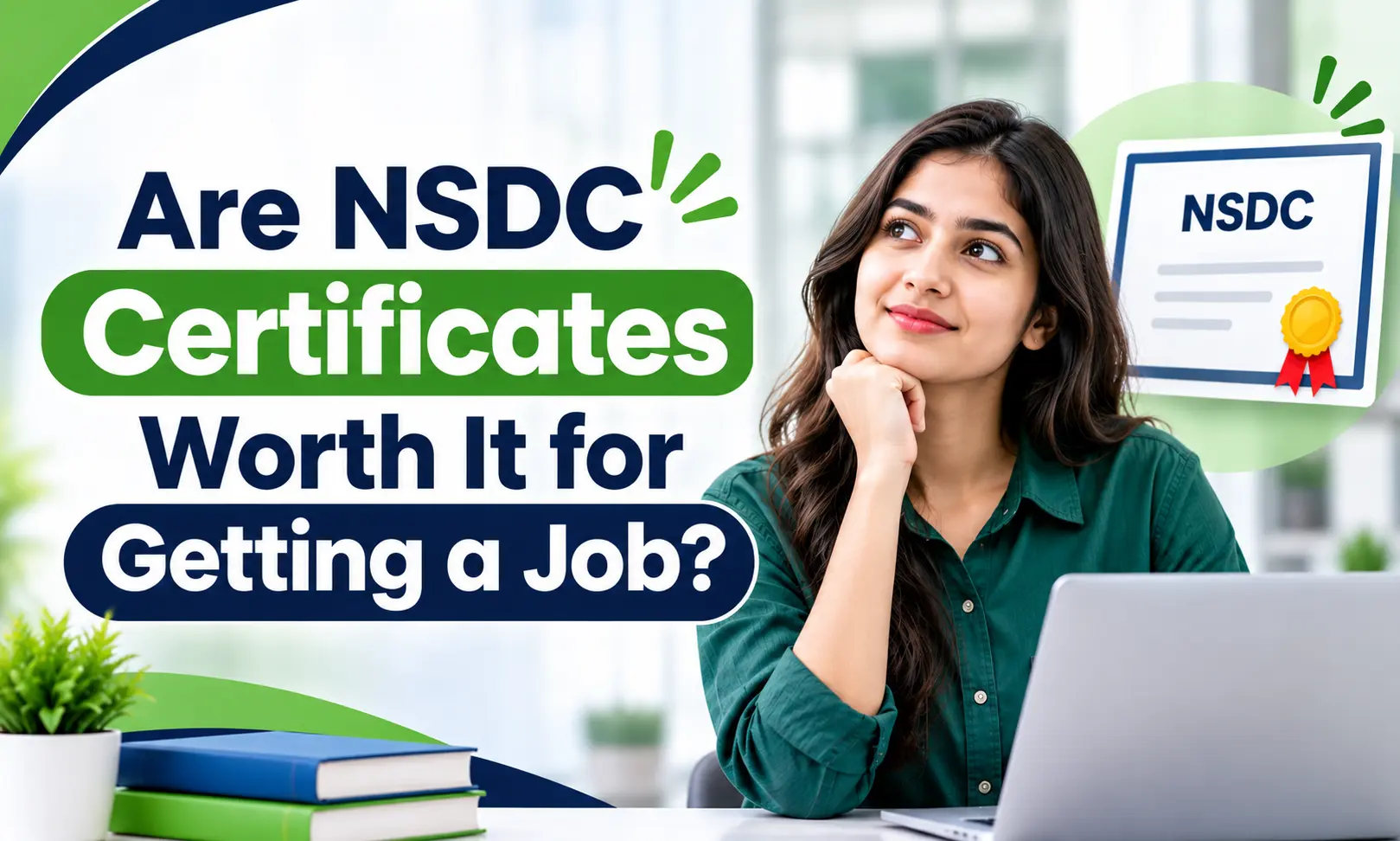
- Is the certificate recognised, such as NSDC-certified?
- Are mock interviews and resume help included?
- Is there a clear job support outcome?
- Can you speak to past students?
The smart plan: start free to confirm your interest, then invest in one quality paid course for your chosen skill. One good course beats ten random ones.
Where ICA Edu Skills Fits In
If you want paid training that doesn’t feel like a gamble, ICA Edu Skills is worth a look. Its courses in accounting, Tally, GST, SAP, and Excel are NSDC certified, and every course bundles soft skills training: monthly mock interviews, group discussions, resume preparation, and SOBO (Speak Out Bowl Out) for speaking confidence.
So you’re not just learning software; you’re learning how to get through the hiring process. Explore the options here: ICA skill development courses.
Conclusion
Free courses open the door. Paid courses help you walk through it. Start free to explore, then commit to one structured, recognised course where you build real skills and practise interviews.
Hiring isn’t about how much you spent. It’s about what you can prove. Pick wisely, finish what you start, and let your skills do the talking.
Few related topics for your knowledge
- Job Guarantee Vs Job Assistance: Core Points Of Differences Between The Two
- 10 Life Changing Simulation Softwares To Learn In Upcoming Years
- Top 20 Journal Entries Questions And Answers For Interview
- 15 Essential Inventory Valuation Questions & Answers For Interview
- 50 Important Cash Book Questions & Answers For Interview Preparation
Frequently Asked Questions
1. Can I get a job with only free courses?
Yes, it’s possible if you build projects and practise consistently. Without structure, feedback, and interview prep, though, it usually takes longer.
2. Are paid courses worth it for freshers on a tight budget?
They are when the course offers real-tool practice, a recognised certificate, and interview support. Avoid ones that only offer recorded videos.
3. How do I know a paid course is genuine?
Look for NSDC or similar recognition, a clear syllabus, trainer access, student reviews, and placement support details. Ask for a demo class first.
- Free vs Paid Skill Courses: Which Actually Gets You Hired - November 20, 2026
- Why Do Recruiters Ask About Microsoft Office Skills? - November 18, 2026
- 5 SAP FICO Interview Mistakes That Cost You the Job - November 13, 2026