















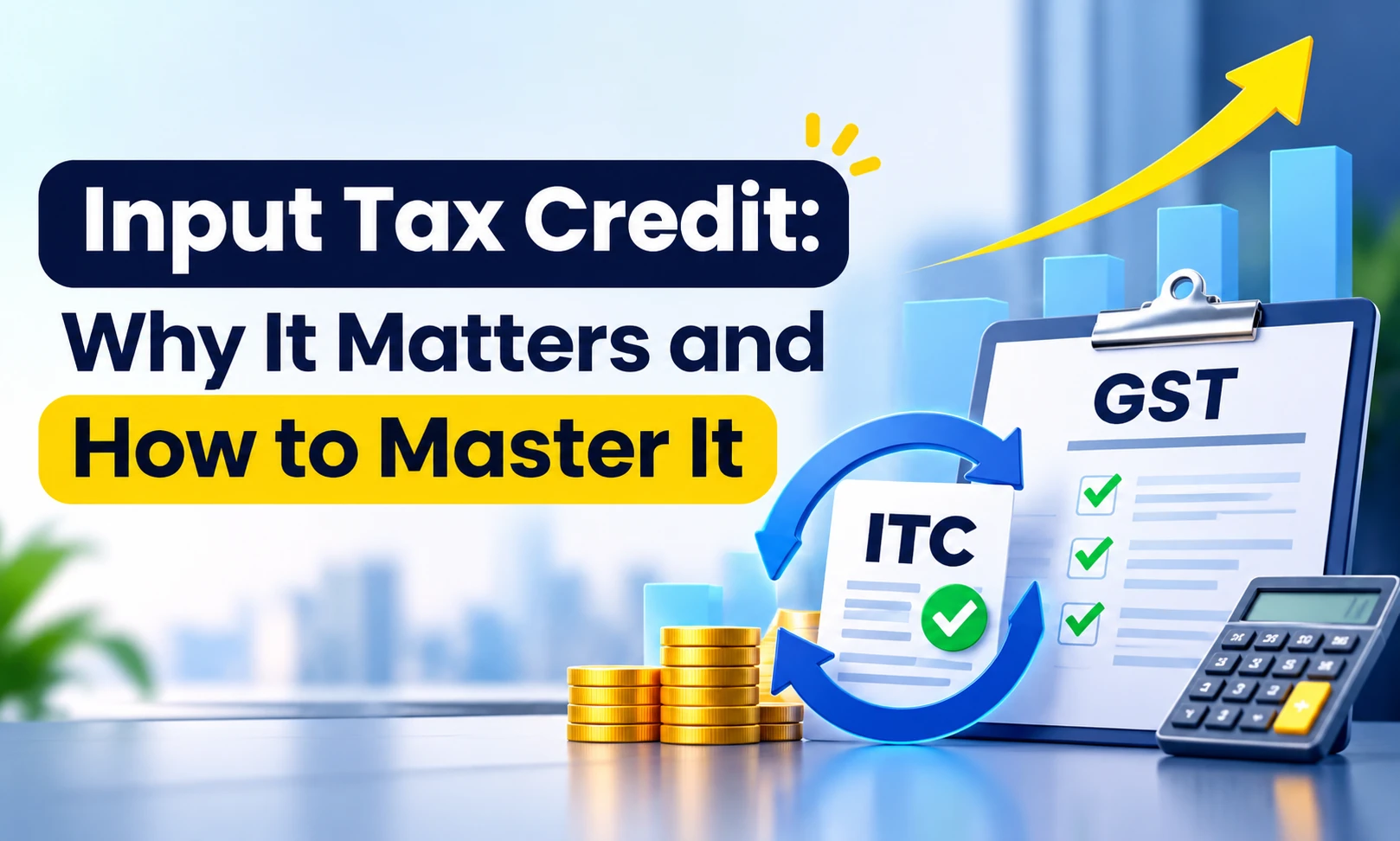
Input Tax Credit: Why It Matters and How to Master It







Your First Day as an Accounts Executive
Your manager says, “Our GST payable looks too high this month. Find out why.” You open the books and freeze. Everything is recorded, but nobody claimed the ITC.
That one miss can cost a company lakhs. It is also one of the most common questions in GST interviews. Let’s make sure you’re never the person who freezes.
What Is Input Tax Credit?
When you buy something for your business, you pay GST on it. When you sell, you collect GST from your customer. ITC means you don’t pay tax twice. You deduct the GST you already paid from the GST you owe.
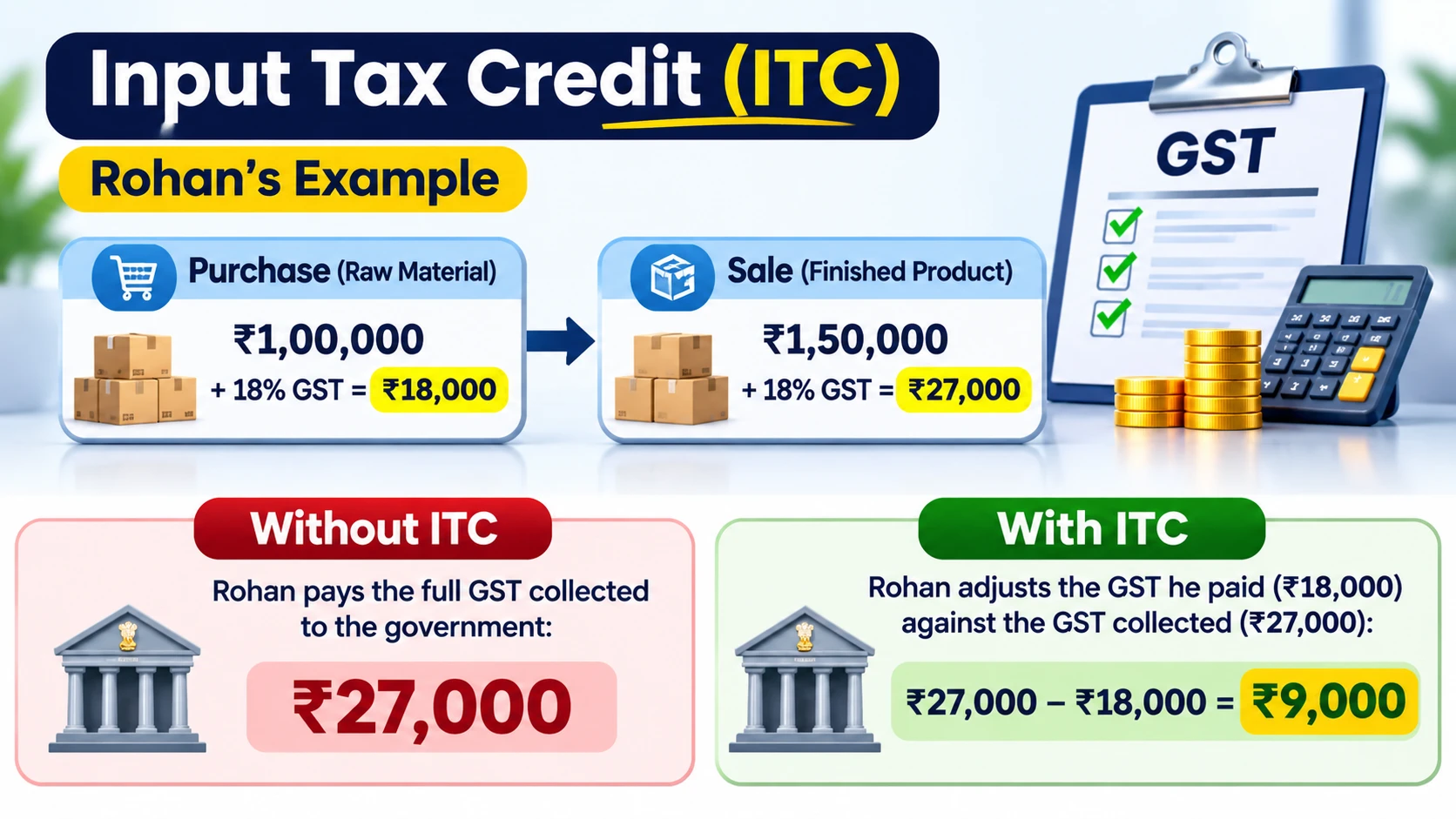
Worked example:
- Rohan buys raw material for ₹1,00,000 + 18% GST = ₹18,000 GST paid
- He sells the finished product for ₹1,50,000 + 18% GST = ₹27,000 GST collected
- Without ITC, he pays ₹27,000 to the government
- With ITC, he pays ₹27,000 − ₹18,000 = ₹9,000
Same business, same sale. ITC saves him ₹18,000.
Conditions for Claiming ITC
You can’t claim ITC just because you have a bill. Under Section 16 of the CGST Act, you need:
- A valid tax invoice or debit note
- Actual receipt of the goods or services
- The credit showing in your GSTR-2B
- The supplier has filed returns and paid the tax to the government
- Your own GSTR-3B filed
- Payment to the supplier within 180 days, or the credit must be reversed
- The claim must be made before the annual deadline, which is 30 November following the financial year or the annual return date, whichever is earlier
Common ITC Claim Mistakes
Even experienced professionals slip here:
- Claiming without checking GSTR-2B. If it isn’t there, don’t claim it.
- Claiming blocked credit. Items like motor cars (in most cases), food and beverages, and club memberships fall under Section 17(5).
- Missing the deadline. Unclaimed ITC simply expires.
- Ignoring the 180-day rule. Unpaid supplier invoices mean reversal, plus interest.
- Wrong GSTIN on the invoice. The credit gets stuck.
- Claiming ITC on personal use or exempt supplies. This invites notices.
Why This Skill Gets You Hired
Every business that pays GST needs someone who can claim ITC correctly. Freshers who understand GSTR-2B reconciliation stand out in accounting interviews. Career switchers from non-commerce backgrounds can also enter finance roles through this skill.
How a GST Course Helps You Master ITC
Reading about ITC is one thing. Doing it on real data is another. The GST Certification Course by ICA Edu Skills is built to bridge that gap. A good GST course takes you through:
- ITC eligibility and blocked credits
- Return filing and GSTR-2B reconciliation
- Handling mismatches and reversals
- Practical, industry-style exercises
You learn the concepts and practise them, so you can walk into an interview with confidence.
Few GST related topics for your knowledge
- Place Of Supply In GST: Importance, Meaning & Types
- 10 Essential Topics Covered In GST Courses
- How To File GSTR 1: Process, Deadlines & Penalties Explained
- GST Registration Process: Steps, Requirements, Status Checks, Benefits
- Structure of GST in India: Types, Rates, 4-Tiers Tax
- Top 50 GST Interview Questions & Answers
Conclusion
ITC is the difference between a company overpaying tax and running efficiently. Understand the rules, avoid the common mistakes, and you become the person every accounts team wants. Start with the basics, practise on real examples, and build the skill that employers look for.
Frequently Asked Questions
1. Can I claim ITC if my supplier hasn’t filed GST returns?
No. The credit must appear in your GSTR-2B, which depends on your supplier filing their return.
2. What happens if I miss the ITC claim deadline?
The credit is lost. You can’t claim it later.
3. Can a fresher without a commerce background learn ITC?
Yes. With a structured GST course and practice, ITC is easy to learn.

- Input Tax Credit: Why It Matters and How to Master It - November 24, 2026
- Free vs Paid Skill Courses: Which Actually Gets You Hired - November 20, 2026
- Why Do Recruiters Ask About Microsoft Office Skills? - November 18, 2026