
.jpg)

















Unemployment Rate in India 2026: Why Graduates are Struggling







As of early 2026, India stands at a unique crossroads. We have more graduates than ever before, yet finding a stable job feels like winning the lottery. If you’ve been scrolling through LinkedIn only to see Open to Work banners everywhere, you aren’t alone.
A recent report has sent shockwaves through the country: 67% of unemployed youth in India are now graduates. This isn’t just a small dip in the market; it’s a wake-up call about the unemployment rate in India 2026.
Table of Contents
- The Rising Unemployment Rate in India 2026
- The Reality of Graduate Unemployment in India
- Urban vs. Rural Unemployment in India
- Why is Educated Unemployment Rising in India?
- The Reality of the Indian Education System vs. Industry Needs
- The Solution: Bridging the Gap with Practical Skills
- How to Get a Job After Graduation in India
- How ICA Edu Skills Can Help
- Conclusion: Take Charge of Your Career
- Frequently Asked Questions
The Rising Unemployment Rate in India 2026
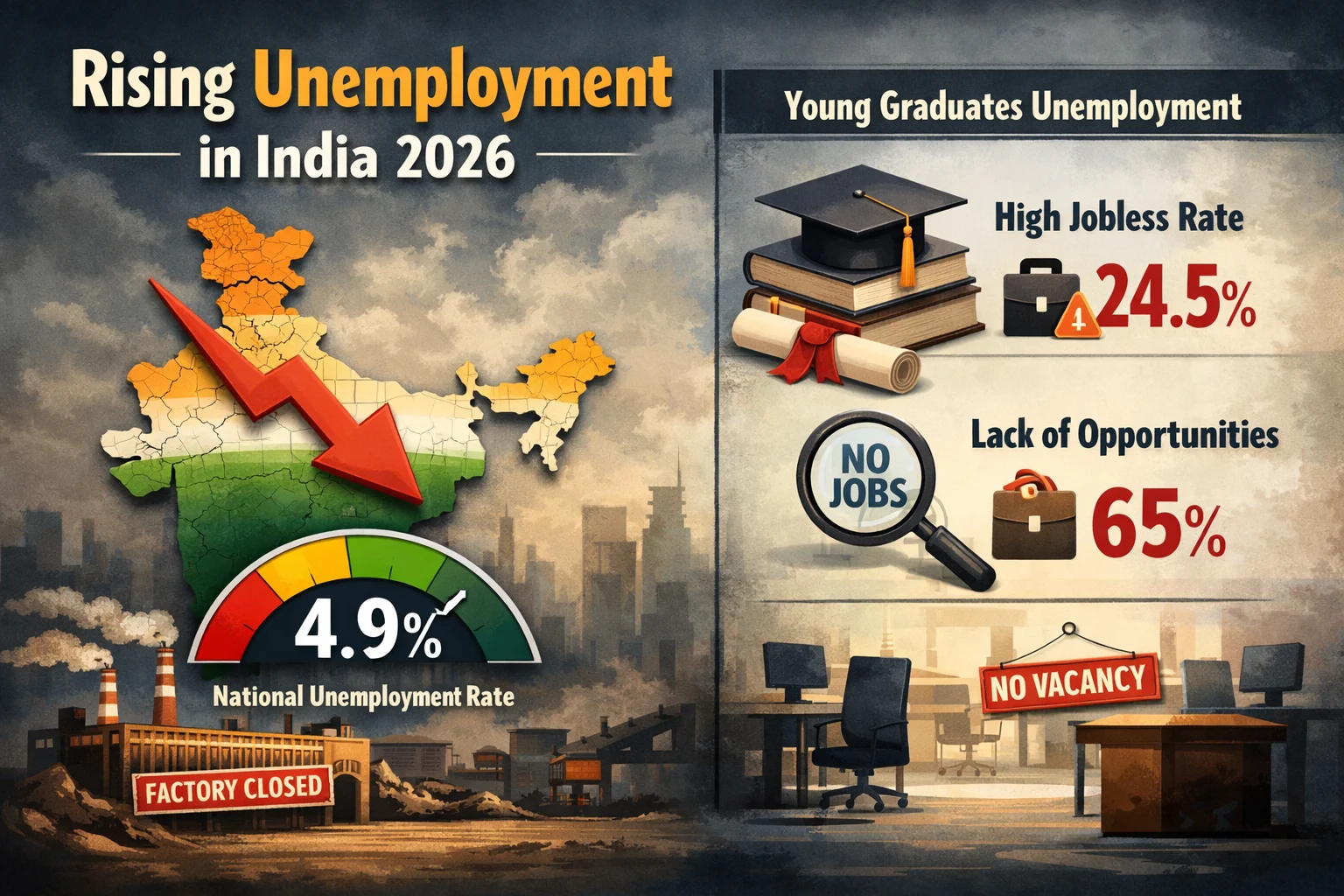
The unemployment rate in India 2026 tells a story of two Indias. While the overall national unemployment rate hovered around 4.9% in February 2026, the numbers for young graduates are far more alarming.
The Reality of Graduate Unemployment in India
The State of Working India 2026 report by Azim Premji University highlights a grim milestone. Nearly 40% of graduates under the age of 25 are currently without work. Even for those who find a job, only 7% secure a permanent salaried position within their first year.
This surge in graduate unemployment in India isn’t due to a lack of effort. In fact, tertiary enrollment has risen to 28%, putting India on par with many developed nations. However, the volume of degrees hasn’t matched the volume of high-quality roles.
Urban vs. Rural Unemployment in India
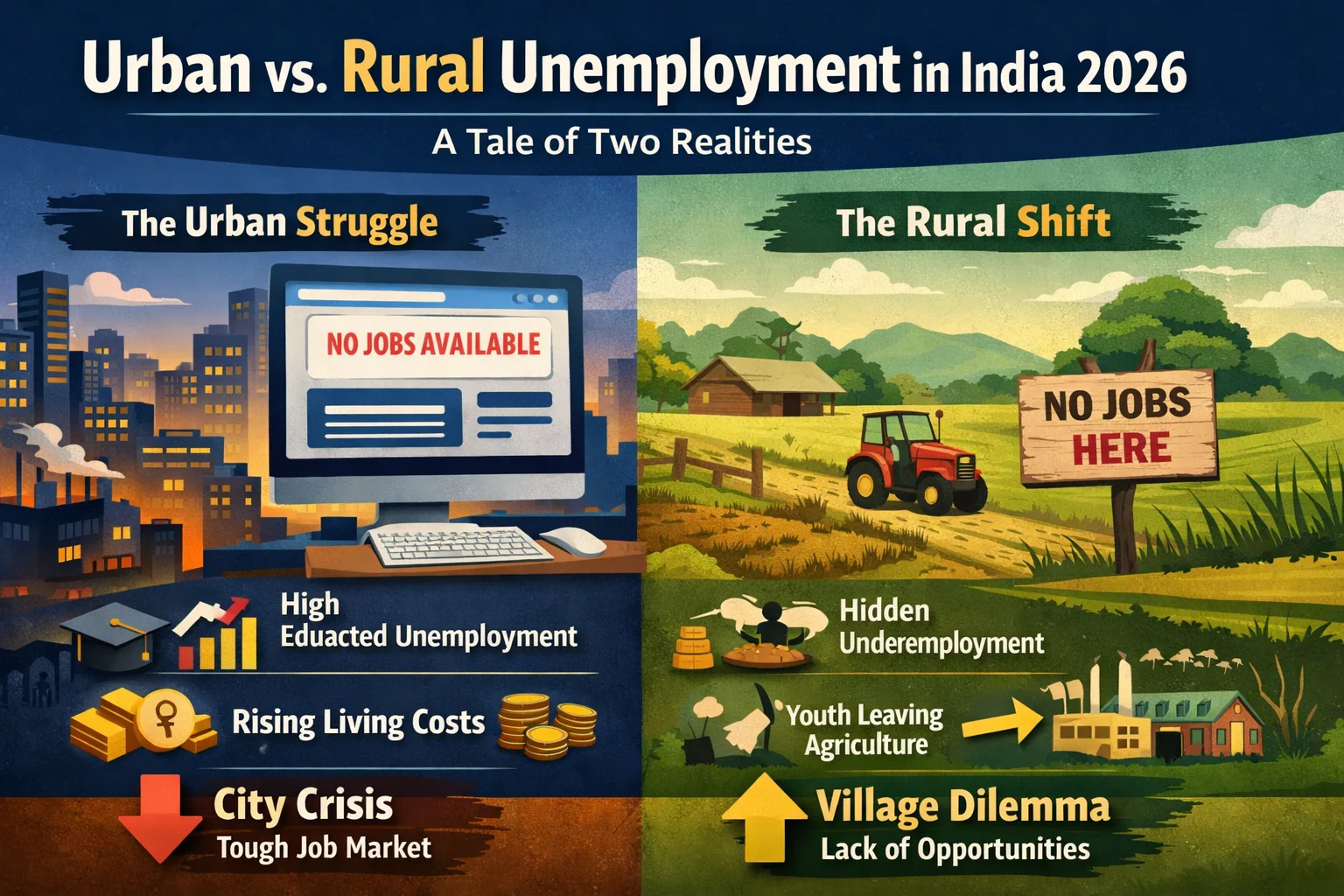
The crisis looks very different depending on where you live. While we often focus on tech hubs, the unemployment rate in India 2026 shows a significant divide between city life and village life.
The Urban Struggle
In cities, the competition is fierce. Urban areas often see higher rates of “educated unemployment” because graduates congregate in metros looking for high-paying roles. However, the cost of living in cities makes unemployment even more devastating for young professionals.
The Rural Shift
In rural India, unemployment is often “disguised.” Many people work on family farms because they lack other options, even if their labor isn’t actually increasing output. As more rural youth gain degrees, they are moving away from agriculture, leading to a spike in rural youth seeking formal jobs that simply don’t exist in their localities yet.
| Metric | Urban Unemployment | Rural Unemployment |
|---|---|---|
| Primary Cause | Skill gap & High competition | Lack of industrial opportunities |
| Common Job Type | Service sector & Gig work | Agriculture & Casual labor |
| Graduate Impact | Very High (Migrant stress) | Moderate (Lack of local roles) |

Why is Educated Unemployment Rising in India?
It seems like a contradiction: if more people are getting degrees, shouldn’t the economy be booming? Unfortunately, the unemployment rate in India 2026 is rising among the educated for several specific reasons.
1. The Numbers Mismatch
India’s higher education system is expanding faster than the job market can keep up. Recent data shows India adds roughly 5 million graduates every year, but only about 2.8 million graduate-level jobs are created annually. This massive surplus means millions are left competing for a handful of roles.
2. The Quality of Education and Infrastructure
While the number of colleges has increased, the quality hasn’t always followed. Many private institutions struggle with:
- Teacher Shortages: Student-teacher ratios often exceed 40:1 in many regions.
- Outdated Curricula: Students are learning methods from a decade ago that don’t apply to today’s AI-driven world.
3. Waiting for the Right Role
Graduates often have the financial support to wait for a better job. Many choose to remain unemployed while preparing for government exams or searching for a prestigious white-collar job that matches their degree.
The Reality of the Indian Education System vs. Industry Needs
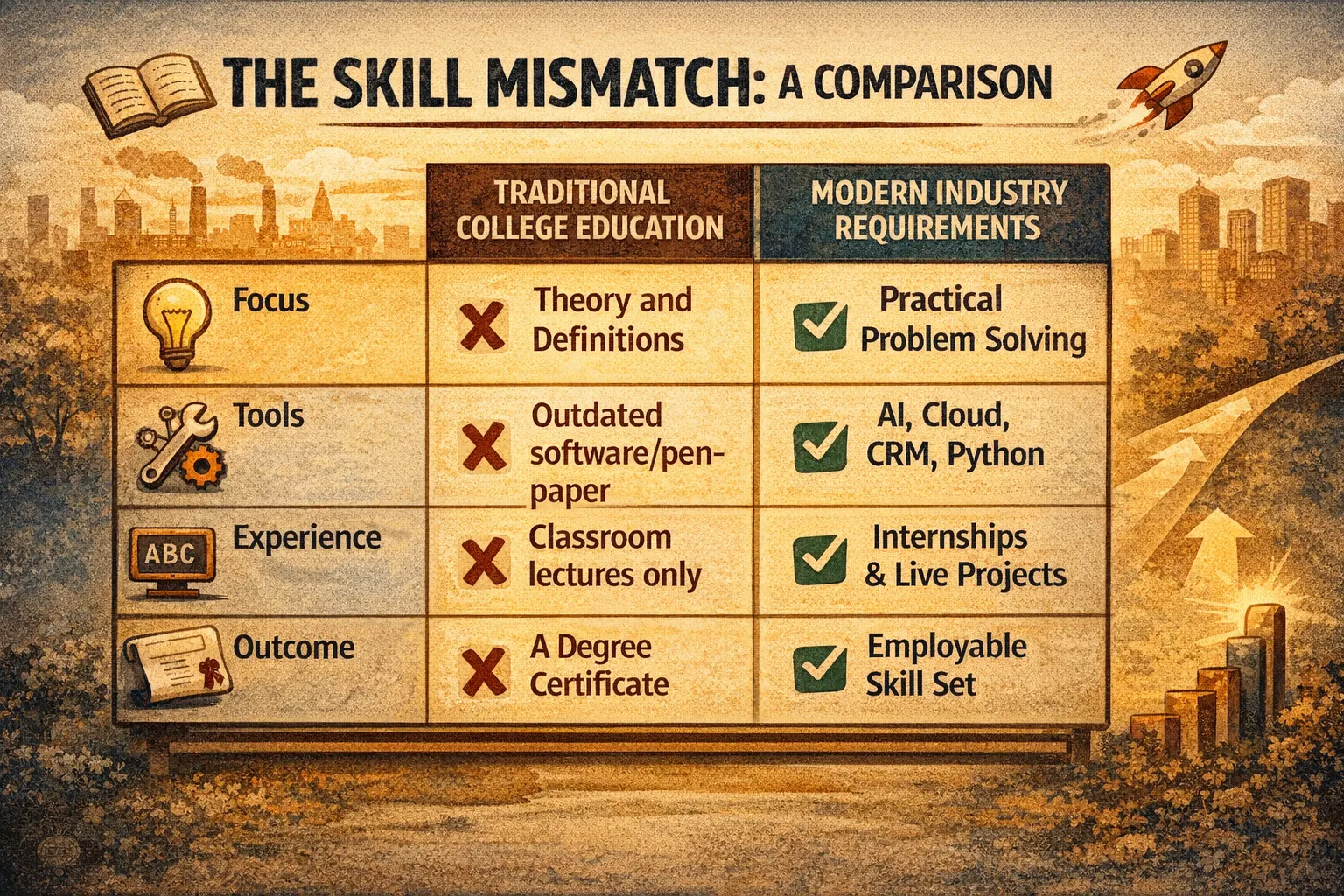
The reality of the Indian education system is that it remains largely theoretical. Most colleges focus on rote learning and passing exams rather than building job-ready individuals.
Employers today aren’t looking for someone who can recite a textbook. They want candidates who understand AI, digital marketing, and complex data tools.
The Solution: Bridging the Gap with Practical Skills
If you are wondering how to get a job after graduation in India, the answer isn’t more degrees. It is more skills.
Internship Importance for Students
You cannot underestimate the importance for students in today’s market. An internship is no longer an “extra” on your resume; it is the bridge that proves you can handle real-world pressure. It helps you build a network and understand the soft skills: like communication and teamwork, that 60% of employers say graduates lack.
Transitioning to Job-Oriented Courses
Since the reality of the Indian education system often leaves you with a degree but no direction, you must take control. The path to a career in 2026 is paved with practical skills and job-oriented courses.
How to Get a Job After Graduation in India
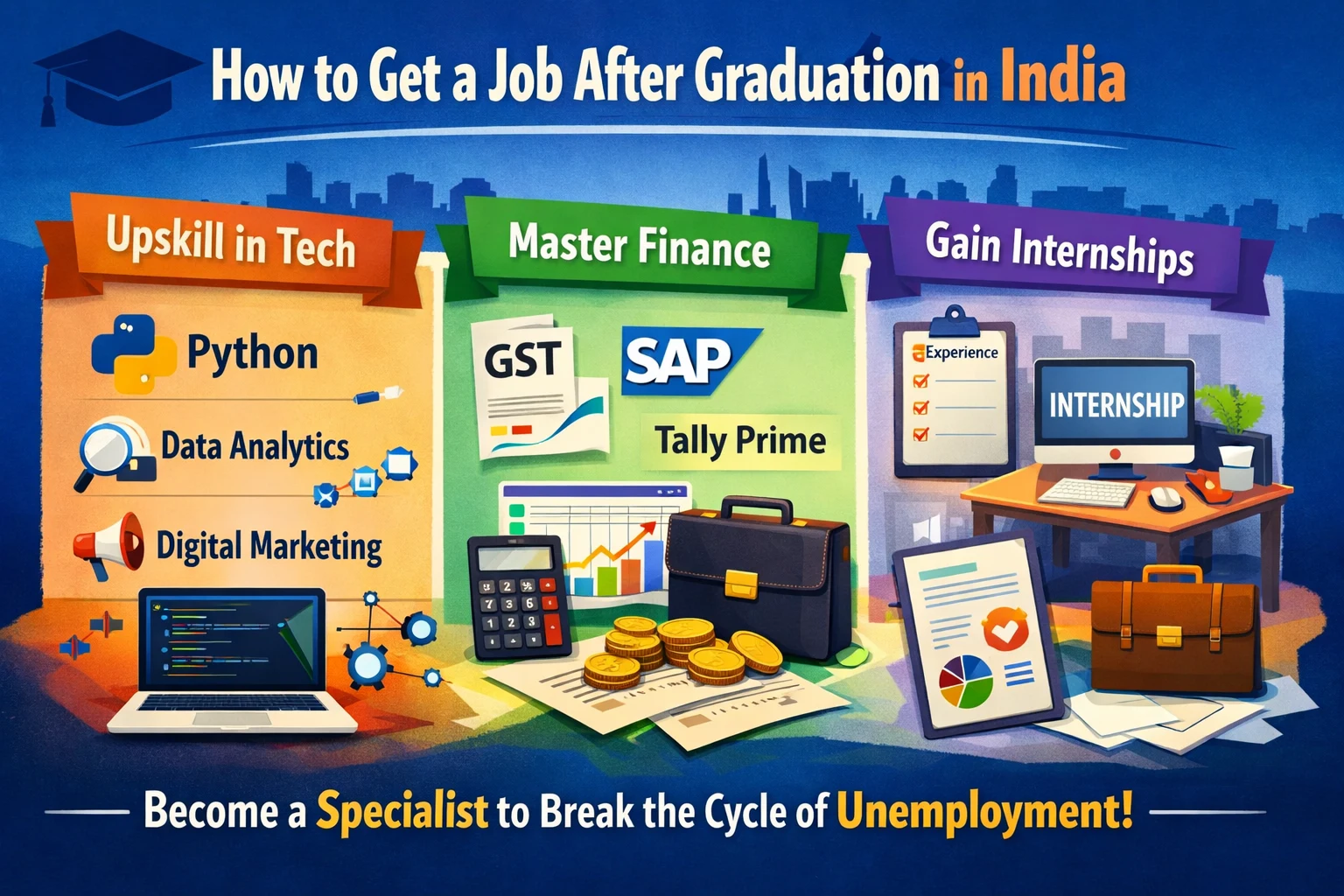
The secret to breaking the cycle of graduate unemployment in India is specialization. Instead of being a general graduate, become a specialist.
- Upskill in Tech: Learn Python, Data Analytics, or Digital Marketing.
- Master Finance: Focus on GST, SAP, and Tally Prime, skills every Indian business needs.
- Prioritize Internships: Remember the internship importance for students; it’s the best way to prove you can do the job before you’re even hired.
How ICA Edu Skills Can Help
At ICA Edu Skills, we don’t just teach; we make you Industry Ready. Our courses are designed to close the gap between education and employment by focusing on:
- Hands-on Training: Master tools like Tally Prime, SAP, and advanced Excel.
- Placement Support: We connect you directly with top recruiters.
- Practical Projects: Learn by doing, not just by reading.
Few related topics for your knowledge
- Job Guarantee Vs Job Assistance: Core Points Of Differences Between The Two
- 10 Life Changing Simulation Softwares To Learn In Upcoming Years
- Top 20 Journal Entries Questions And Answers For Interview
- 15 Essential Inventory Valuation Questions & Answers For Interview
- 50 Important Cash Book Questions & Answers For Interview Preparation
Conclusion: Take Charge of Your Career
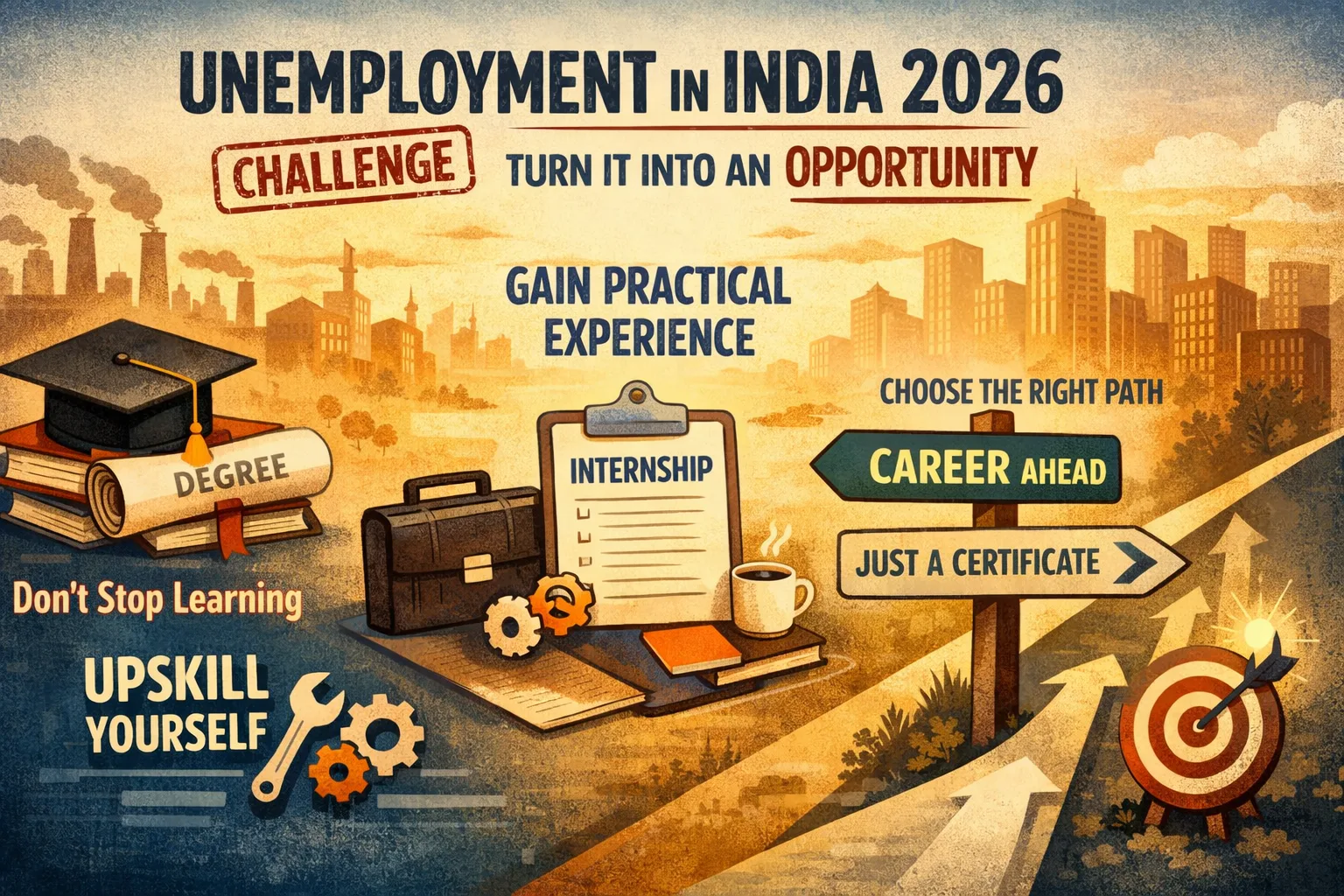
The unemployment rate in India 2026 is a challenge, but it is also an opportunity for those who choose to upskill. Don’t let your degree be the end of your learning journey. Focus on practical skills, grab every internship opportunity, and choose a path that leads to a career, not just a certificate.
Frequently Asked Questions
1. What is the current unemployment rate in India 2026 for graduates?
While the national average is around 4.9%, the unemployment rate for graduates under 25 is nearly 40%, according to the latest 2026 reports.
2. Why is graduate unemployment in India so high right now?
The main reasons include a lack of practical skills, an oversupply of graduates compared to job creation, and a significant gap between education and employment.
3. What is the biggest flaw in the reality of the Indian education system?
The system is often criticized for being too theoretical. It focuses on exams rather than teaching the digital and technical tools used in modern workplaces.
4. How does the internship’s importance for students affect hiring?
Internships provide the practical project experience that 52% of employers demand. It is often the deciding factor for freshers looking for their first break.
5. How to get a job after graduation in India if I lack technical skills?
The best route is to enroll in short-term, job-oriented courses like those offered by ICA Edu Skills, which focus on practical training and placement.

- Master Data in SAP PP: The Skill Recruiters Test First - September 18, 2026
- Nobody’s Talking About These Basic Computer Skills For Beginners - September 11, 2026
- The GST Return Filing Course That Could Save Your Career - September 5, 2026